
Precise, Not Pedantic
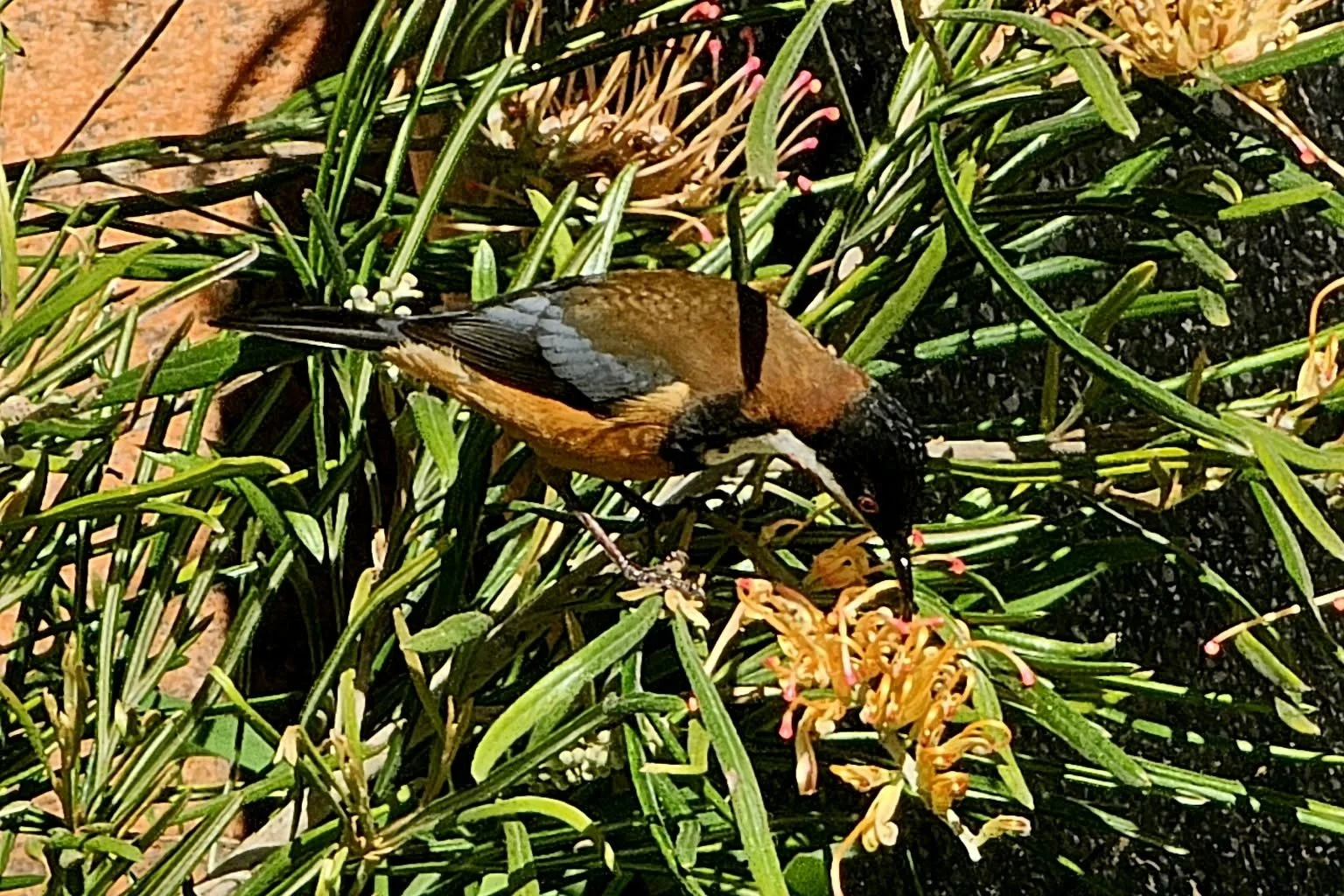
An Eastern Spinebill feeding on the grevillea outside my courtyard.
"Try to be pedantic with your words."
It is often one of the first things I suggest to the people I work with. Not because grammar matters, but because the way we speak shapes so much of how we relate to the world around us, and how that world relates back to us.
It starts with understanding ourselves. When we can name what we really mean, we are far better placed to understand what other people mean too. And when other people can understand us, things tend to go more smoothly, at home, at work and everywhere in between.
So I have said that sentence many, many times.
The word I got wrong
Recently, I caught something.
Here I was, encouraging people to choose their words with care, and choosing the wrong one to do it.
Pedantic is about correcting other people. It is the person at the table who points out every small mistake. It is about being right. That is not what I am asking of anyone, and it is not what I mean.
What I mean is precise.
Precise is choosing your own words so the people you love get your real meaning. It is about being understood.
It is a small swap. But it changes how the whole sentence lands. One version sounds like a lecture. The other sounds like care.
What one word can do
Nearly a hundred years ago, researchers showed people a series of simple line drawings. Each drawing came with a name. The same shape might be called "eyeglasses" for one group and "dumbbells" for another.
Later, everyone was asked to draw what they remembered. Their pictures had quietly drifted towards the word they had been given. The eyeglasses looked more like eyeglasses. The dumbbells looked more like dumbbells.
One word changed the memory.
Our own words work the same way. The words we use about our day, our relationships and ourselves shape what we remember and how we see things afterwards. Choosing them carefully is not fussiness. It is how we make sure the picture in someone else's mind matches the one in ours.
A lesson from the garden
Outside my courtyard there is a grevillea that the Eastern Spinebills love. If you watch one feed, you notice something. It does not guess. Its long, curved beak is shaped for exactly the flower it needs, and it goes straight to the nectar.
There is no wasted effort and no damage to the flower. Just a precise fit.
Words can be like that. The right word goes straight to the meaning, without bruising anything on the way.
Exact with your own, generous with everyone else's
There is a balance here, and it matters.
Being precise is a standard we hold for ourselves. It is not a standard we enforce on others. Most people do not say things perfectly, especially when they are tired, stressed or upset. If we start picking at their words, we stop hearing them.
So these days, I say it a little differently:
Try to be precise with your words.
Be exact with your own.
Be generous with everyone else's.
Being generous means listening for what someone means, not just what they say. It means assuming the kindest likely meaning first, and asking "Do you mean...?" before reacting.
Precision makes us easier to understand. Generosity makes us easier to talk to. Together, they make conversations feel safer for everyone.
Something to try this week
Notice one word you use often that does not quite say what you mean. "Fine" is a common one. "Busy" is another. Next time it comes up, try a more precise word instead, and see whether the conversation changes.
You might be surprised by how much difference one small swap can make. I certainly was.
With Stability, Comes Ability.
Amanda
Able Stables
